
Water management in Steel Mills [Download this white paper as PDF file]
At a glance. Water plays a vital role in steel production, supporting processes such as cooling, gas cleaning, descaling, and product finishing. Modern steel mills rely on complex, largely closed-loop water systems that circulate significant volumes to improve efficiency and reduce consumption. Despite these systems, maintaining water quality remains a major operational challenge. Warm temperatures, suspended solids, and nutrients create ideal conditions for microbial growth and biofilm formation on internal surfaces like pipes and heat exchangers. These biofilms impair heat transfer, increase energy demand, accelerate corrosion, and contribute to fouling. They also pose potential health risks, including the spread of harmful bacteria such as Legionella. Effective water management depends on continuous monitoring and targeted treatment strategies. Advanced tools, including real-time biofilm detection technologies, enable early intervention and optimized chemical use. Such approaches improve system reliability, lower operational costs, and support more sustainable, environmentally responsible steel production.
Steel production is a cornerstone of the global economy, supplying essential materials for key sectors such as construction, transportation, mechanical engineering, and consumer goods manufacturing. Over the decades, global steel output has risen dramatically, from 148 million tonnes in 1950 to more than 1,880 million tonnes in 2022. This rapid growth has brought increasing attention to the environmental footprint of the steel industry, especially in terms of water usage and management. Water plays a critical and irreplaceable role in almost every stage of the steelmaking process, from raw material preparation to final product finishing. It is used for direct and indirect cooling, pollution control, gas cleaning, scale removal, and many other technical and environmental applications. With steel plants typically operating large-scale, high-temperature processes and often relying on closed-loop water circuits, managing both water quantity and quality has become a strategic priority.

Particularly challenging is the control of microbial growth within water systems, where warm temperatures and abundant nutrients create ideal conditions for biofilm formation. When some of the bacteria from water bulk settle on surfaces in contact with the liquid, they form a structured community of microorganisms enclosed in a self-produced, protective matrix. . Its presence can lead to a range of operational issues, including a significant reduction in heat exchange efficiency, increased risk of corrosion, microbial-induced fouling, and compromised hygiene - including the risk of Legionella proliferation. This white paper provides an overview of water usage in the steel industry, with a focus on process requirements, treatment technologies, and the risks associated with microbial proliferation. Special attention is given to biofilm management and real-time monitoring technologies, which help steel plants maintain operational efficiency while minimizing environmental and economic impacts.
Steel production process
There are several methods used to produce steel but, globally, steel mills rely mainly on three core technologies. The most common approach is the traditional blast furnace route, which is responsible for about 60% of global steel production. This method uses coke as a fuel and is typically part of a large, integrated plant. Another widespread technology is the Electric Arc Furnace (EAF), which relies primarily on scrap metal as a raw material and accounts for roughly 35% of steel output worldwide. A smaller share, around 5%, comes from the Direct Reduction (DRI) process, an alternative route that is often used in combination with EAFs. Among these, the blast furnace route remains the most established and widely adopted, especially in large-scale industrial settings. More precisely, this method involves an integrated plant made up of a series of interconnected units, where raw materials and energy flow continuously from one stage to the next. At the heart of the system lies the blast furnace itself, where iron ores undergo a reduction process to produce pig iron. This pig iron is then transferred downstream to a Basic Oxygen Furnace (BOF), where it is converted into steel. Supporting this core process are several critical facilities. One of them is the coking oven, where coal is transformed into coke, a crucial fuel for the blast furnace.

The plant also includes a pretreatment unit for the iron ore blend, ensuring optimal composition before it enters the furnace. In addition, a dedicated power plant burns residual process gases to generate the electricity and steam needed to support the entire operation, improving energy efficiency and internal resource use.
Water management in steel mills
Steel manufacturing is both energy-intensive and water-dependent. Water serves numerous functions throughout the production cycle, including direct and indirect cooling, furnace off-gas cooling, blast furnace operations, pollution control, and final product cleaning and finishing. On average, an integrated steel plant consumes between three and five cubic meters of water for every ton of steel produced. Since heat is applied at virtually every stage, continuous cooling of equipment and products is essential. However, the thermal load and the extensive recirculating water systems make steel mills particularly susceptible to challenges such as scaling, corrosion, and biological fouling. For this reason, water quality must be monitored and controlled constantly. To reduce environmental impact and operational costs, steel plants strive to reuse and recycle water flows as much as possible. Achieving this goal requires appropriate treatment technologies, selected according to the origin and characteristics of the water source. Reverse osmosis is commonly used for saline or brackish water, while ultrafiltration is preferred for wastewater with high organic content. Clarification and sedimentation processes are employed for water contaminated with mill scale, particulates, or oil. Alternative water sources such as rainwater, surface water, groundwater, seawater, and treated industrial effluents can also be utilized, provided they undergo the necessary treatment steps. Water circuits in steel plants generally fall into three main categories: wet air pollution control circuits, direct-contact water circuits, and equipment cooling systems. Managing these systems effectively is essential to ensure operational continuity, energy efficiency, and environmental sustainability. Water usage is distributed across several key processes. In coke production, water is used for temperature control and air pollution management. During sintering, it plays a role in moisture control and cooling through spray systems. Iron making involves water use for gas cleaning, cooling, and temperature control. In steelmaking, both Basic Oxygen Furnaces and Electric Arc Furnaces require water for cooling and air pollution control. Processes like continuous casting rely on direct-contact sprays and product washing, while hot rolling demands water for scale removal, equipment cooling, and trough washing. Further downstream, acid pickling, alkaline cleaning, and surface coating all involve water for rinsing and pollution control.

Throughout the entire process, safeguarding the infrastructure is a critical concern. Pipes, heat exchangers, and other metal components are continuously exposed to harsh conditions, making them vulnerable to corrosion and fouling. To prevent such issues, protective chemicals - such as anticorrosive and anti-scaling agents - are introduced into the system. Particular care is given to the treatment of process water, especially the water used in chemical cooling circuits, which is conditioned with appropriate additives to preserve the integrity and performance of the equipment over time.
Biofilm management and monitoring in steel mills
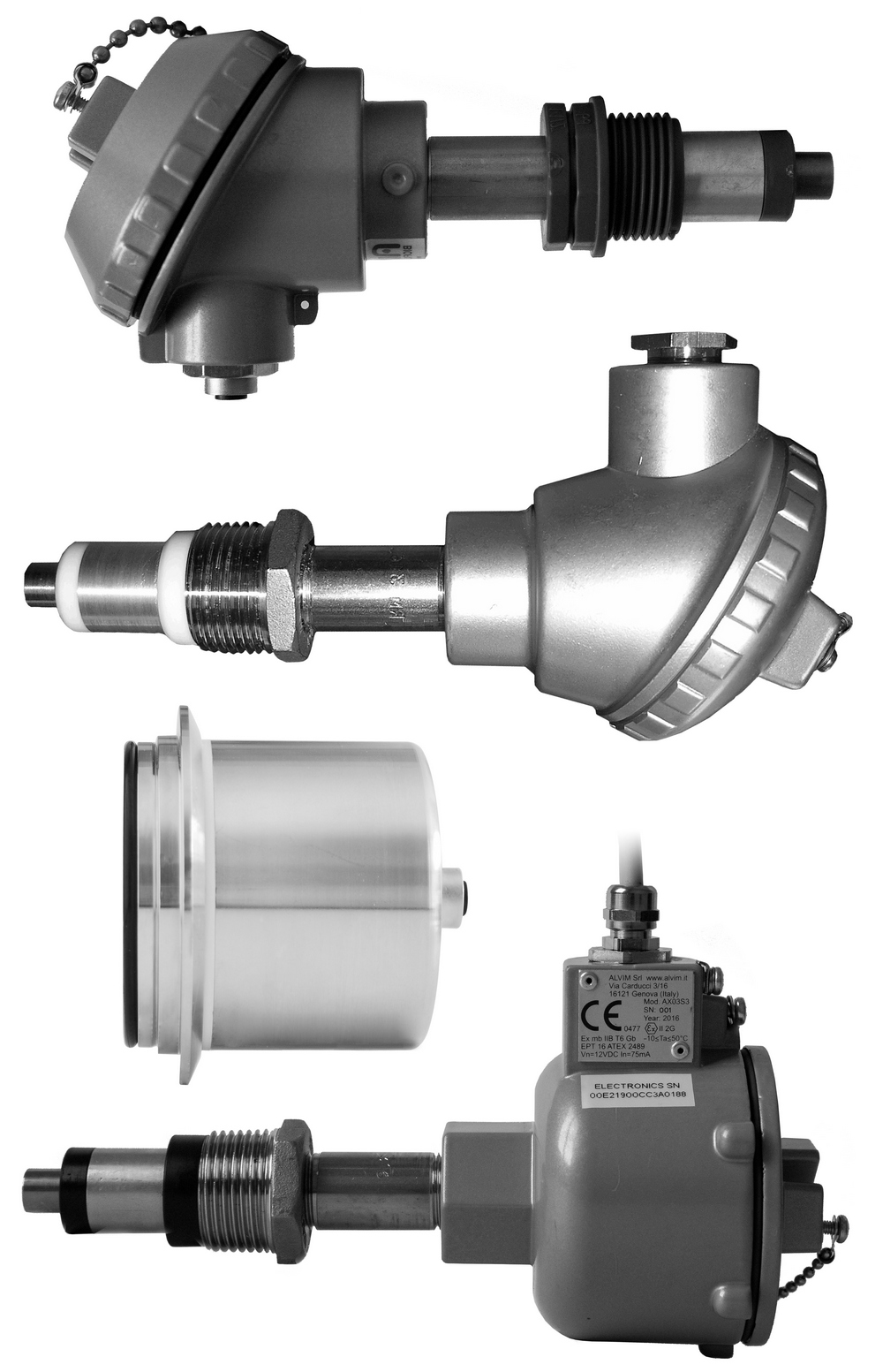
As discussed above, in steel mills water is used in different processes and it must be constantly monitored. These water systems are often extensive and complex, operating at high temperatures and regularly exposed to nutrients and organic matter. Such conditions create an ideal environment for the development of microorganisms and the subsequent formation of biofilm within pipelines, heat exchangers, basins, and tanks. To address biofilm-related challenges, ALVIM Biofilm Monitoring Technology offers a proactive solution by enabling the real-time detection of biofilm formation. The installation of ALVIM Sensors within critical water circuit such as cooling towers and closed-loop system makes it possible to detect microbial growth at a very early stage. This early warning capability allows for timely corrective action and facilitates the optimization of biocide dosing, ultimately reducing chemical use while enhancing the efficiency and reliability of the entire water system. Moreover, this approach contributes to lowering water and energy waste, thus supporting both operational performance and environmental sustainability
Conclusions
Water plays a fundamental role throughout the steel production cycle, serving critical functions from process cooling to pollution control and cleaning. As demand for steel continues to grow worldwide, the need for efficient, sustainable water management becomes increasingly urgent. In this context, optimizing the use and treatment of water resources is not only an environmental priority, but also a key operational strategy. Challenges such as corrosion, scaling, and biofilm can significantly affect the efficiency, reliability, and cost-effectiveness of steelmaking operations. These risks are particularly acute in recirculating water systems, where warm and nutrient-rich conditions promote microbial growth. Integrating advanced technologies such as the ALVIM Biofilm Monitoring System offers steel mills the opportunity to detect microbial proliferation at an early stage and take timely, targeted action. This approach improves the effectiveness of biocide dosing, reduces chemical and energy waste, and enhances the overall operational stability of the plant. By adopting proactive monitoring and advanced treatment strategies, steel producers can significantly reduce maintenance costs, minimize environmental impact, and ensure compliance with increasingly strict regulatory standards. Ultimately, efficient water management is not only about resource conservation - it is a strategic advantage for the entire steelmaking industry.
|
Do you have biofilm-related issues?
|